

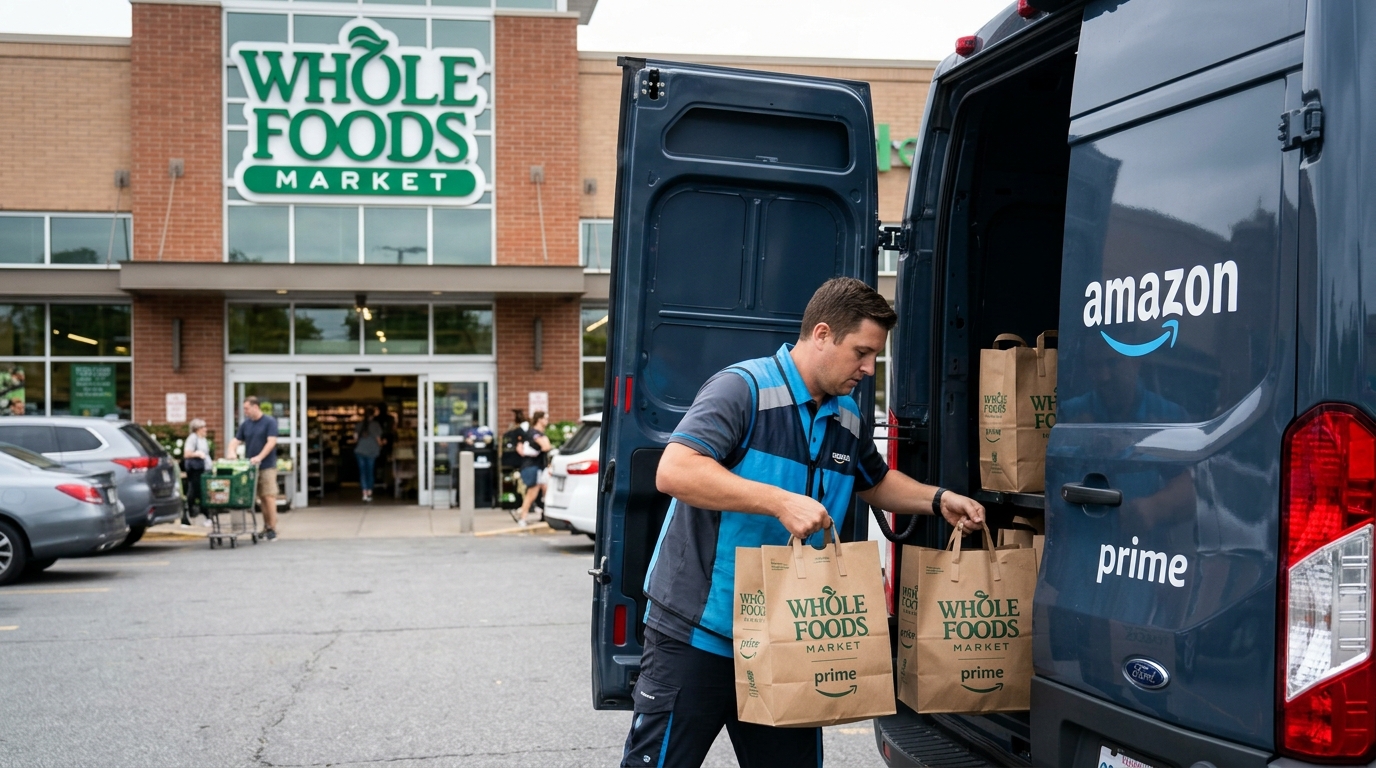
Amazon is transforming its brick-and-mortar grocery footprint by rolling out small-format urban stores and transitioning Amazon Fresh to a digital-exclusive model. This real estate pivot highlights a new approach to capturing city-level market share.
During a late 2026 earnings presentation, Amazon announced it had shuttered nearly 80 physical Fresh locations across the US and UK. The company will now rely on its network of 549 Whole Foods locations as its primary physical grocery base. The most critical development for competitors is the rapid deployment of the Daily Shop banner. These compact urban markets occupy between 3,330 and 10,000 square feet, representing a massive reduction from traditional supermarket layouts. By shrinking the store footprint, Amazon is effectively building high-density neighborhood fulfillment nodes that cater equally to walk-in consumers and digital orders.
The Cross-Category Basket Multiplier
This aggressive pivot toward localized micro-formats is supported by specific consumer purchasing data. Corporate leadership noted that grocery buyers are highly valuable to the broader retail ecosystem. Shoppers acquiring fresh items via rapid shipping add nearly seven times as many basic household staples to their carts compared to standard buyers. Furthermore, these same users acquire four times the volume of general merchandise and spend twice as much on those secondary categories. Tracking these habits reveals why dominating the neighborhood fresh food segment is vital for maximizing overall platform revenue.
To capitalize on these large order sizes, Amazon retained its Fresh banner strictly for e-commerce transactions. The company is also leveraging artificial intelligence to drive average basket values higher. Over 400 million users engaged with Alexa for Shopping over the past twelve months. Consumers utilizing this digital assistant spend 50 percent more per transaction. As the retailer optimizes its digital storefront and minimizes its physical store dimensions, the barrier between a traditional retail site and an urban dark store vanishes.
Mapping the New Fulfillment Grid
As Amazon deploys smaller physical locations to speed up order processing, rival grocers must monitor where these new service boundaries emerge. Spotting geographic shifts early gives operations teams the data needed to optimize their own local supply chains. Strategy leaders can deploy Darkstore Location & Delivery Areas Mapping to track these micro-format rollouts and protect their neighborhood market share.
To equip your market intelligence team with precise data on competitor service zones, reach out to the FoodDataLab team today.
Source: Whole Foods leads Amazon’s fresh push as delivery gets faster, cheaper
