

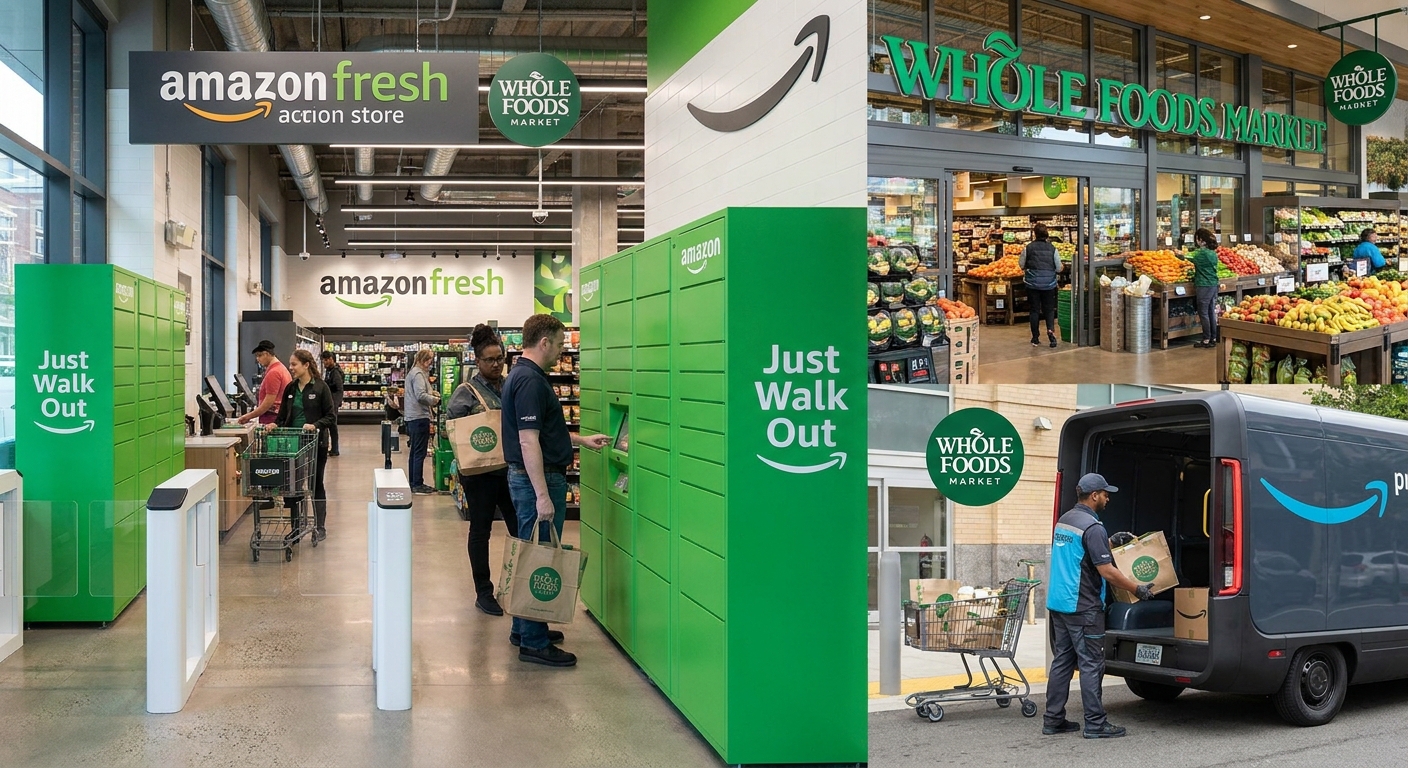
The e-commerce leader is fundamentally reshaping its supermarket operations. By relying on urban store formats and faster fulfillment capabilities, Amazon intends to use perishable goods as a gateway to dominate broader consumer purchasing habits.
Physical retail strategy at Amazon is undergoing a sharp correction. Executives confirmed during their third-quarter earnings call that Whole Foods Market is now the central pillar of their brick-and-mortar ambitions. Following the closure of 58 United States and 19 United Kingdom Amazon Fresh locations throughout late 2025 and early 2026, the company is launching compact Daily Shop formats. These new venues range from 3,330 to 10,000 square feet. They represent a significant departure from standard 40,000-square-foot supermarkets. Meanwhile, the Amazon Fresh brand will operate exclusively as a digital grocery channel.
This physical realignment serves a specific financial objective. Grocery represents a massive portion of uncaptured household expenditure for the company. To secure these funds, the organization is utilizing fresh produce as a critical customer acquisition tool. The underlying metrics support this approach. Consumers buying perishables via same-day fulfillment purchase roughly seven times more basic necessities than standard buyers.
Monitoring the E-Commerce Grocery Shift
Fulfillment infrastructure provides the foundation for this growth. The logistics network handled 1.5 billion overnight or same-day shipments globally during the third quarter. Accelerating the supply chain directly decreases operational expenses per package. Lower fulfillment costs allow the company to maintain aggressive pricing on produce and pantry staples. Sales volumes for these categories expanded approximately three times faster than other departments.
The competitive threat extends far beyond food. Supermarket consumers on the platform order almost four times more items in categories like apparel and home goods. Furthermore, artificial intelligence integrations are amplifying this spending behavior. Over 400 million shoppers interacted with the Alexa shopping assistant over the past year. Users of this tool generate order values that are fifty percent larger than non-users.
Defending Category Leadership
Rival grocers and consumer packaged goods brands must carefully track how this aggressive online catalog expansion unfolds. Maintaining an optimized product range is essential when facing a competitor actively converting fresh food buyers into total household shoppers. Category managers must identify missing items and blind spots before they impact revenue, and assortment gap analysis delivers clear daily visibility into competitor grocery ranges. Continuous market monitoring ensures leaders can protect their digital shelf space against rapid assortment shifts.
Schedule a call with the FoodDataLab team to improve your online grocery monitoring strategy: https://fooddatalab.com/contact
Source: Whole Foods leads Amazon’s fresh push as delivery gets faster, cheaper
