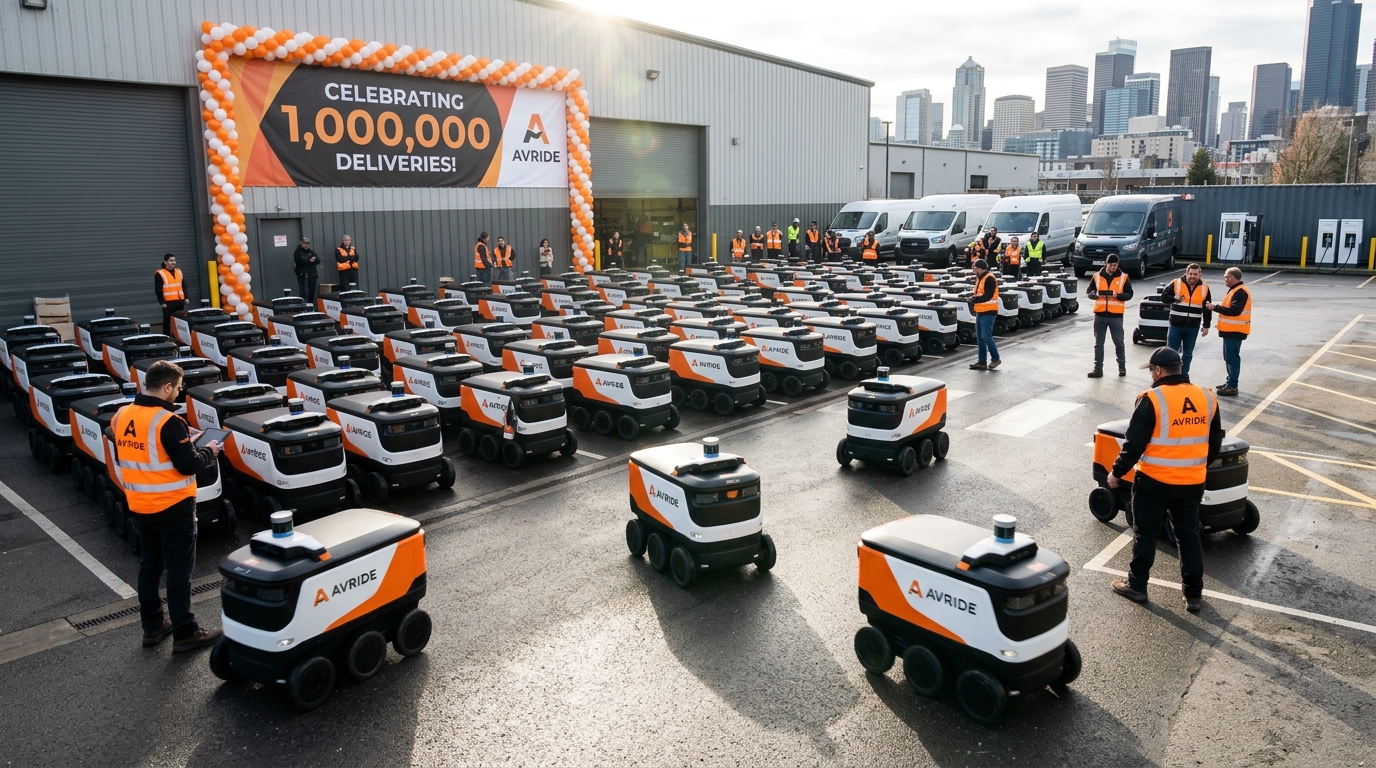
During October 2026, the robotics firm executed 180,000 consumer trips. Buyers place their food orders using familiar aggregator interfaces. Store employees place the prepared meals inside the machine. Upon arrival, the consumer unlocks the cargo compartment through their mobile device.
This physical network spans multiple environments. Key service areas include Miami, Philadelphia, Jersey City, Austin, and Dallas. In a recent statement, the organization noted: “This milestone shows Avride’s momentum as it expands across city neighborhoods and university campuses.”
Scaling hardware networks creates visible shifts in consumer applications. A sudden influx of sidewalk machines influences wait times and geographic availability. The service provider acknowledged the complex nature of mixed-environment operations. According to the firm: “Each setting brings different demands. A campus lunch rush, a busy neighborhood sidewalk, and a restaurant’s evening pickup all require technology and operations that work together.”
Market intelligence teams must monitor how these units affect local platform performance. When automated fleets handle short-distance logistics, human drivers become available for longer routes. This redistribution alters overall speed metrics across the given zone.
Measuring the Impact of Autonomous Fleets
Aggregator executives need clear visibility into how automation changes neighborhood-level performance. Tracking wait time fluctuations during high-demand periods reveals the true operational value of these integrations. You can deploy ETA time-series and peak congestion analysis to monitor how competitor networks handle order surges in automated zones.
To discuss how our intelligence tools track shifting service metrics across major delivery apps, contact the FoodDataLab data team today.
SourceAvride reaches one million robot deliveries as network expands across US (opens in a new tab)