

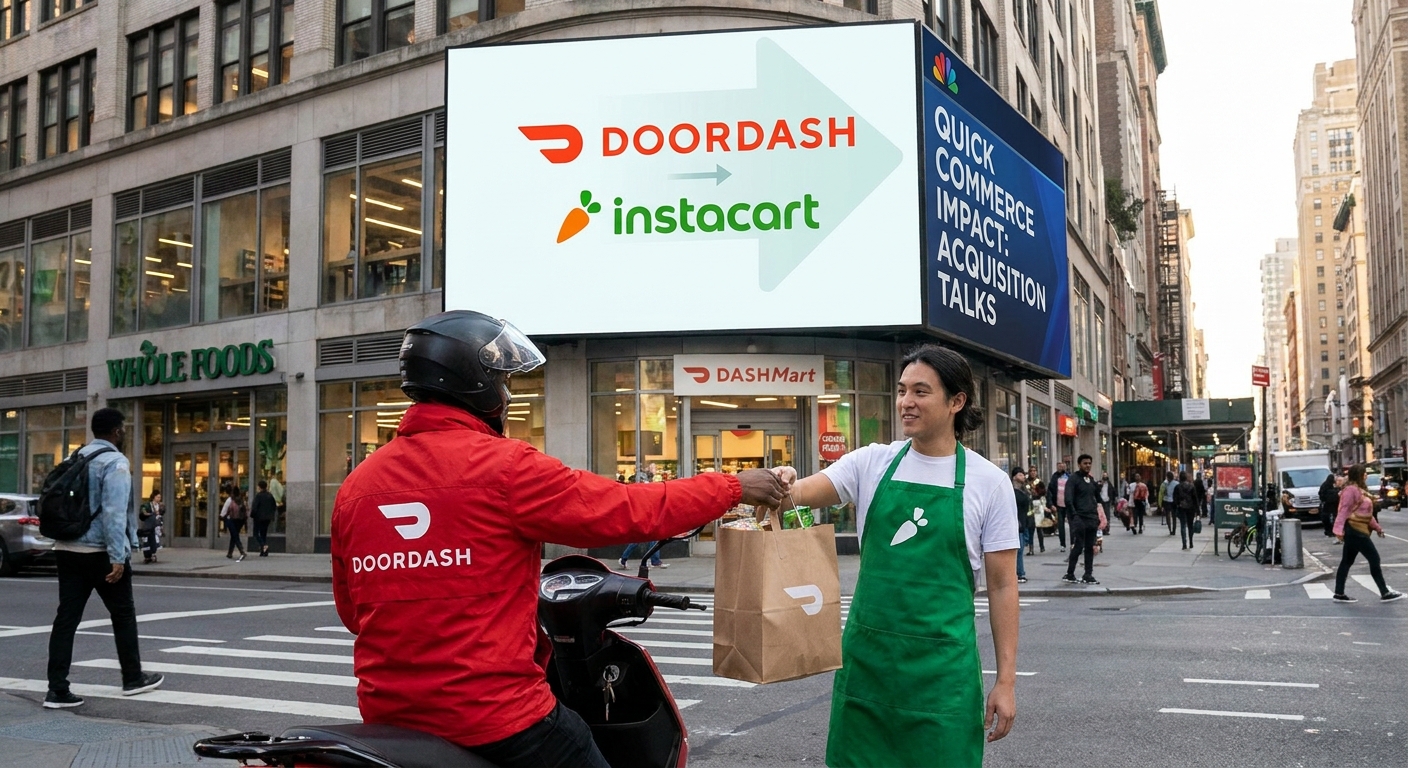
DoorDash announced a $17 billion proposal to buy Instacart in a bid to counter rapid logistics expansions by Amazon. This potential union combines restaurant logistics with grocery assortments to capture the majority of local delivery spending.
Amazon recently disrupted the convenience sector by introducing Amazon Now across dozens of major cities. This logistics network targets thirty-minute windows for household essentials and supermarket items. Furthermore, Amazon expanded one-hour dispatch capabilities to hundreds of locations earlier this year. DoorDash wants to prevent Amazon from monopolizing rapid local commerce the same way it owns the two-day shipping category.
The proposed transaction unites two distinct growth trajectories. DoorDash saw revenue increase by roughly 24 percent in 2024 and nearly 28 percent in 2025. In contrast, Instacart experienced a market segment drop from 26 percent to 18 percent over the last five years. However, pooling their user bases would give the new organization a 77 percent share of domestic delivery platform spending according to Consumer Edge. Uber Eats currently holds steady at slightly below 20 percent.
To justify the high purchase price and ease regulatory concerns, DoorDash is emphasizing merchant benefits. The official announcement highlighted plans to supply independent grocers with advanced retail media networks and white-label website infrastructure. These technical tools would help local shops generate advertising revenue. Additionally, merchants could utilize DashMart fulfillment centers to process digital orders faster.
Uber faces a challenging domestic environment following this consolidation. The company relies on its ridesharing ecosystem and subscription models to maintain profitability. Internationally, Uber is exploring large-scale expansion, evidenced by its $15 billion July intent to purchase Germany-based Delivery Hero. Advertisers might still favor Uber for targeting specific consumer travel moments that a unified grocery and food application cannot easily track.
Tracking Expanded Service Boundaries
Strategic leaders must closely monitor how these overlapping networks affect their local operations. Brand operators need to analyze fulfillment boundaries to understand where the new entity might prioritize its own warehouses over partner stores. You can leverage delivery zone and MOV coverage mapping to analyze competitor reach and protect your regional market share.
Contact our intelligence team to understand how these platform shifts influence your business: Talk to FoodDataLab.
