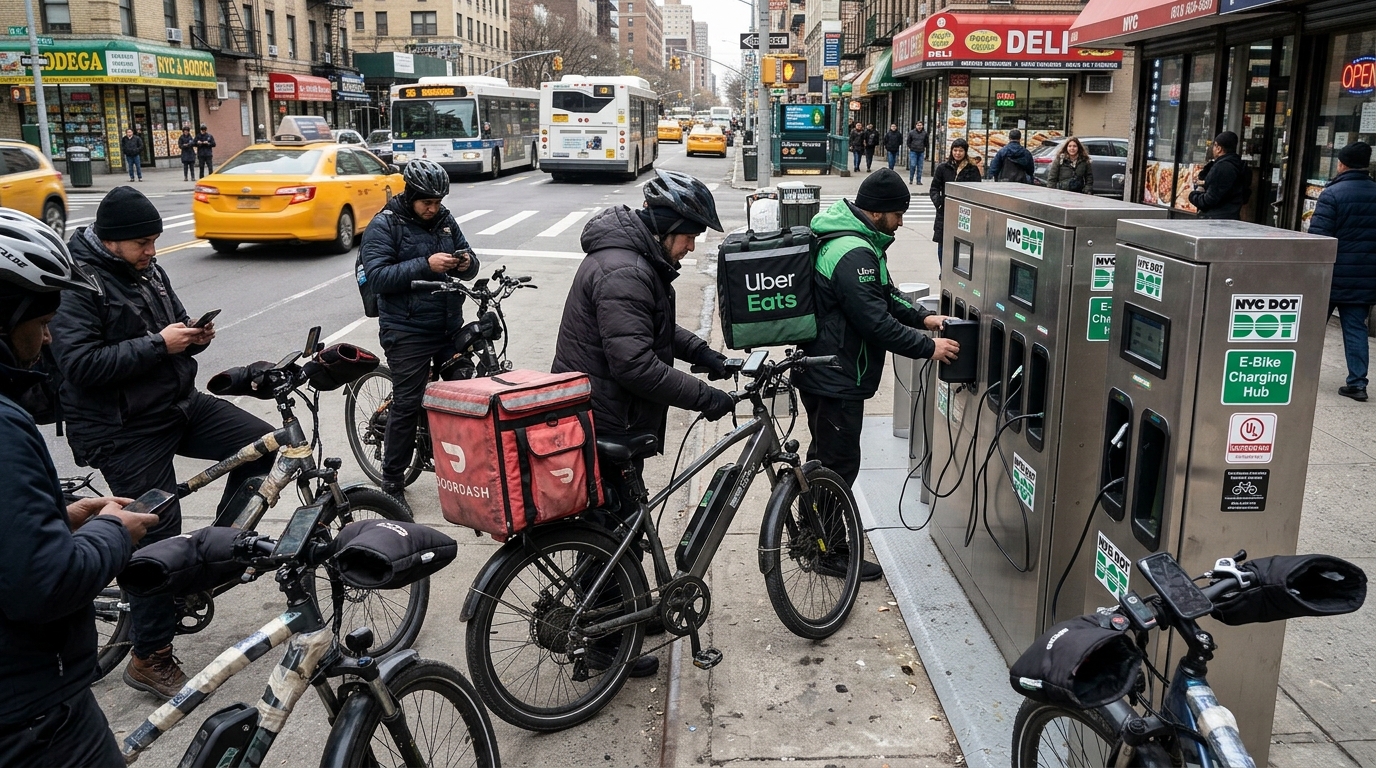
Councilmember Harvey Epstein is preparing legislation targeting major operators like Grubhub, DoorDash, and Uber Eats. The bill demands these private firms construct locations providing secure e-bike storage, charging stations, and bathrooms for drivers. The city Department of Consumer and Worker Protection would dictate the number and placement of these sites within a year of enactment. For industry analysts, the immediate question is how platforms will fund this real estate. Epstein points out that companies like JOCO and Amazon already operate indoor spaces for their urban logistics teams. Adopting this standard across the broader restaurant delivery market means apps will face heavy overhead costs.
The push for private funding follows growing safety and congestion issues. New York City relies on roughly 80,000 gig workers to power its food delivery sector. Between orders, many drivers gather in high-demand zones like the East Village, leading to crowded sidewalks and resident complaints. Furthermore, the reliance on lithium-ion batteries has created severe public safety risks. The fire department reported 71 injuries and nine fatalities from battery-related fires so far in 2026. While the Mamdani administration opened a federally funded charging hub near City Hall in April, worker advocates like Ligia Guallpa argue a single site cannot meet the needs of the entire workforce.
Currently, the Department of Transportation plans to install 25 public charging stations late next year using state funds. However, the proposed legislation shifts the financial responsibility entirely onto the technology platforms. By forcing private enterprises to internalize the cost of their operational footprint, the local government aims to solve an infrastructure gap without spending public money.
Monitoring Platform Responses to Infrastructure Mandates
When delivery firms are forced to lease and maintain physical real estate, those costs rarely stay hidden. Competitors and restaurant partners must closely watch how these expenses filter down into consumer charges. Apps might increase service commissions, adjust delivery zones, or introduce new checkout fees to offset the construction of courier hubs. Market leaders can deploy advertised fees monitoring to track changes in competitor delivery and service costs. Spotting these pricing shifts early allows rival platforms to adjust their own strategies and capture price-sensitive diners.
To learn how market intelligence helps you protect margins against new regulatory costs, contact the FoodDataLab team today.
SourceNYC bill would require food delivery firms to fund fixes to the e-bike 'crisis' (opens in a new tab)