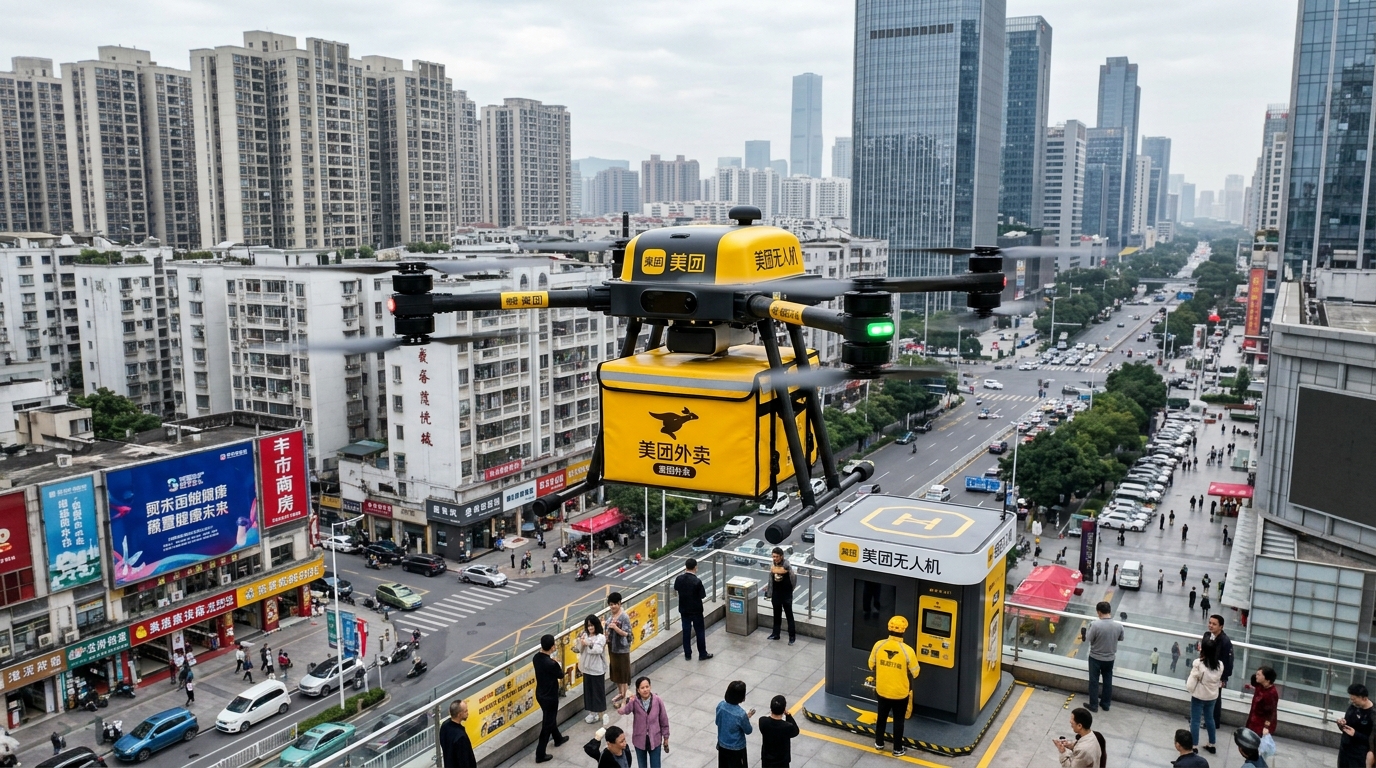
The scale of unmanned dispatch in the region demonstrates a maturing commercial logistics network. Government civil aviation reports highlighted 3.29 million registered drones by the end of 2025. During that same period, total flight hours climbed nearly 70 percent to reach 45.3 million. Major operators are capitalizing on airspace up to 1,000 meters above ground. Firms like Meituan now execute hundreds of thousands of drops across municipalities including Shanghai, Beijing, and Shenzhen.
These devices solve specific operational friction points. Tourists frequently order takeout while visiting sprawling scenic areas. Human drivers struggle to locate patrons efficiently inside these large venues. Unmanned flights establish fixed aerial routes to designated landing pads instead. According to a tourist quoted in regional reports, replacing human couriers with machines also makes strategic sense during the severe summer heat waves experienced locally.
However, this channel introduces unique regulatory dependencies that require continuous tracking. Meituan recently paused its airborne food operations in Shenzhen for 10 days starting November 11. Regulators mandated this temporary block due to the APEC summit, though routes in other cities remained active. Such sudden service disruptions compel rival firms to monitor platform availability closely.
Adapting to Three-Dimensional Competitor Mapping
When competitors introduce autonomous hardware, traditional service boundaries shift rapidly. Market intelligence teams must monitor where these operators launch new landing sites to understand their updated geographic reach. Lacking visibility into competitor reach limits your growth, which is why leading operators rely on delivery zone and MOV coverage mapping to optimize service areas and win new markets.
To learn how accurate platform data can refine your regional strategy, contact the FoodDataLab team.