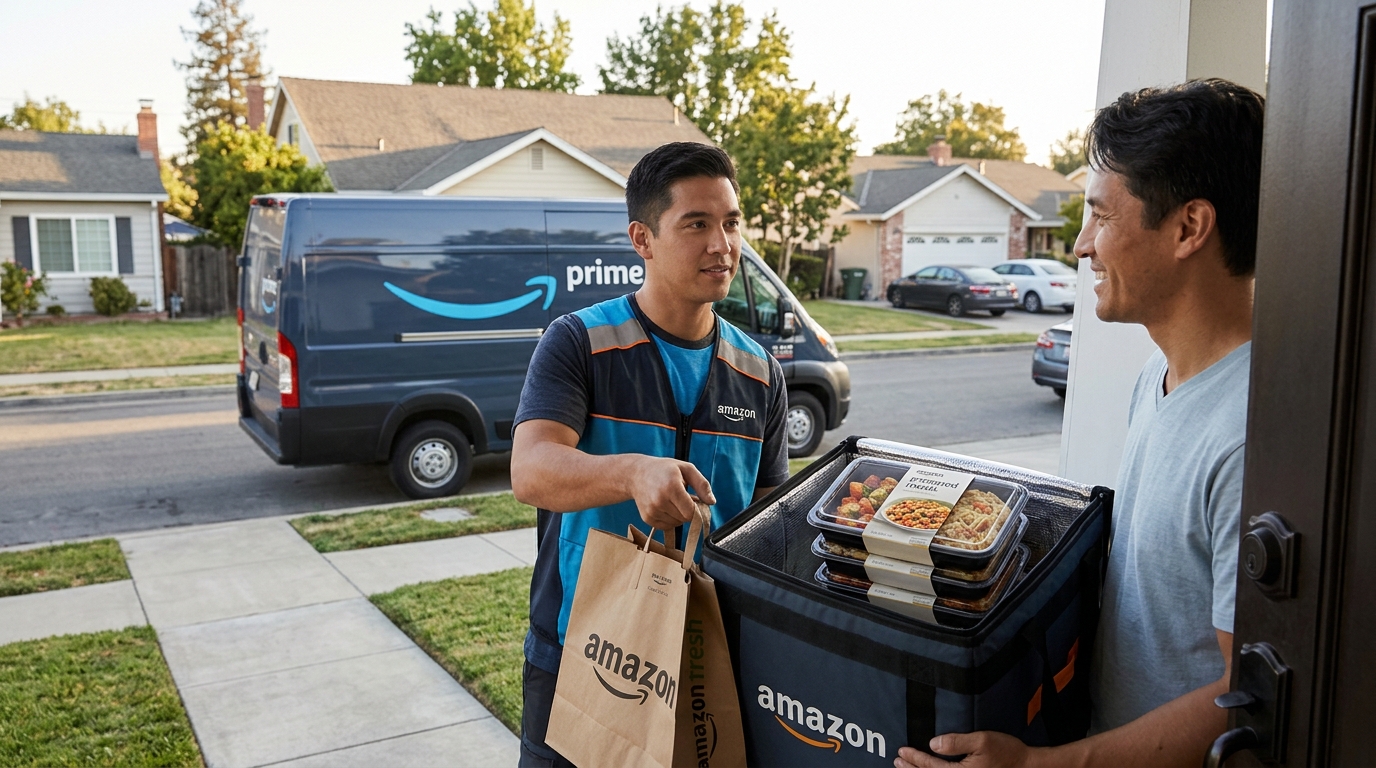
The retail corporation is actively merging standard household shopping with immediate meal solutions. Through the Amazon Now interface, shoppers can request items like breakfast burritos, salads and General Tso’s Chicken for rapid fulfillment. Prime subscribers unlock zero-cost shipping when their total cart reaches 25 dollars. This bundle strategy directly pressures local grocers and rapid delivery networks that rely on standalone grocery orders.
Executive leadership at the company frames this rollout as a budget-friendly alternative to standard takeout. Jason Buechel, Vice President of Amazon Worldwide Grocery Stores, noted that consumers desire quality options that avoid the cooking process or takeout expenses. The catalog also features family-sized Whole Foods Market holiday sides, including Creamy Mashed Yukon Gold Potatoes and Macaroni and Cheese, capturing demand during peak seasonal events.
Monitoring the Grocery Delivery Convergence
This nationwide rollout signals a permanent change in how digital storefronts must build their menus. When a logistics powerhouse integrates fresh, ready-to-eat items into standard retail carts, competitors face a complex retention challenge. Retailers must observe these catalog adjustments closely to ensure their own offerings remain relevant to convenience-driven shoppers.
Supermarkets and rapid delivery applications must spot these catalog vulnerabilities early. Implementing assortment gap analysis delivers clear visibility into competitor grocery ranges, helping category managers plug inventory holes before losing the checkout basket.
To analyze competitor catalogs and protect your digital shelf, schedule a consultation with the FoodDataLab team today.