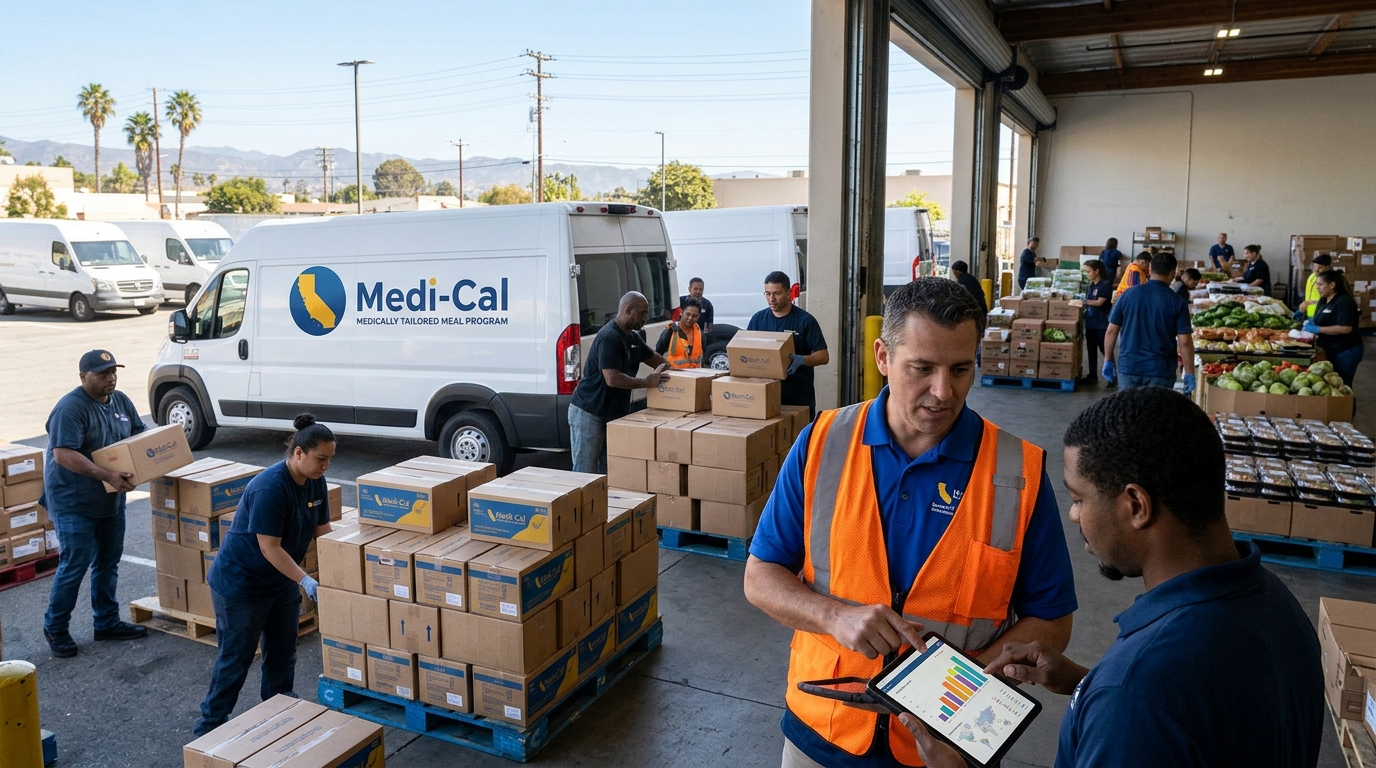
The state intervention focuses on residents managing chronic ailments or recovering from inpatient care. Over 500,000 individuals have utilized this initiative since its inception. During the third quarter of 2025 alone, more than 156,000 eligible patients received customized packages. Across that entire calendar year, total utilization surpassed 200,000 people. To handle this volume, government departments authorized over 1,000 distinct service agreements between late 2024 and 2025.
Specialized operators function with specific financial models that disrupt standard platform economics. Direct-to-consumer vendor Mom's Meals charges a base rate of $7.99 per unit. Certain dietary configurations push that cost up to $8.49. Health Net currently manages 25,000 patients under this system, resulting in $36 million worth of processed claims. If a similar group of 25,000 users requested two daily items for a full year at the starting price, the annual cost would surpass $134 million. This predictable, subsidized revenue stream gives institutional suppliers a distinct advantage over independent local venues.
Adapting Operations to Institutional Competitors
As public health policies redirect substantial capital toward tailored grocery and prepared food distribution, traditional networks face indirect pressure. Delivery leaders must closely watch how these subsidized operators scale across different regions. Applying competitor tracking allows strategy teams to follow pricing adjustments and identify where specialized rivals are gaining ground. Monitoring these dynamics ensures your marketplace can adjust its restaurant acquisition efforts to serve changing neighborhood needs.
Talk to our data specialists to learn how market intelligence helps you navigate new institutional players: Contact FoodDataLab.
SourceState could spend millions on food for Medi-Cal recipients - Stocktonia News (opens in a new tab)