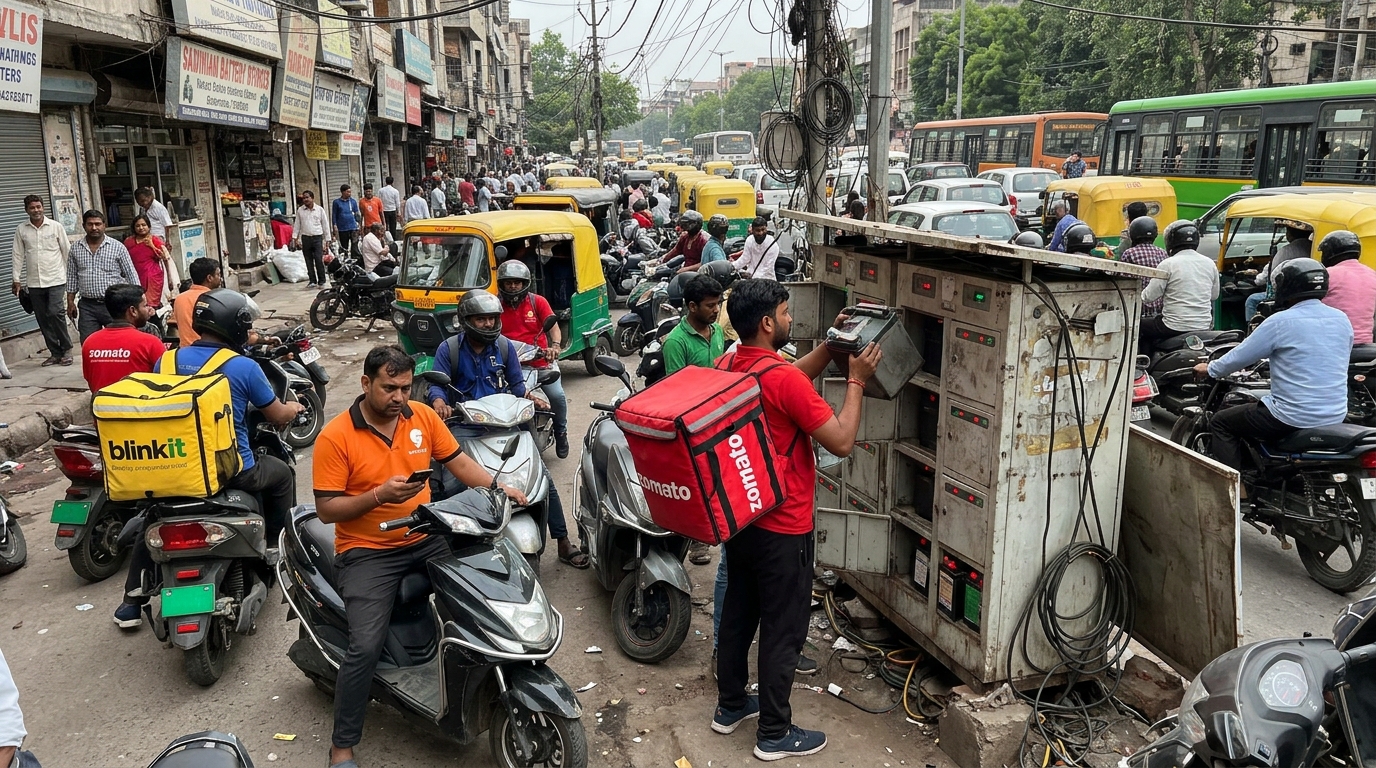
Eternal initially formulated its green mobility deadline when Zomato relied on roughly 1.5 lakh monthly riders. The corporation now manages approximately 12 lakh active delivery partners. Maintaining this expanded workforce requires the group to onboard 30 lakh individuals annually across 900 locations. Chief Sustainability Officer Anjalli Ravi Kumar recently confirmed to PTI that the previous 2030 ambition appears impractical given this massive growth. A completely green fleet demands universal access to charging stations and reliable maintenance. These utilities are often absent in smaller municipalities where platform expansion is currently concentrated.
Observing these fleet modifications provides crucial intelligence for competing aggregators. Transitioning a small scooter workforce in metropolitan zones is fundamentally different from overhauling a nationwide logistics network. Eternal operates diverse mobility formats. Standard quick-commerce orders depend on two-wheelers. Meanwhile, the Hyperpure wholesale division utilizes trucks and commercial vans. Kumar emphasized that a revised corporate objective must encompass all these distinct transport categories. Different vehicle classifications require unique battery specifications and separate charging infrastructures.
For market analysts monitoring platform health, partner acquisition remains a critical metric. Eternal pays partners identical rates regardless of their motor type. The firm also utilizes initiatives like EV Bazaar to introduce partners to battery-powered models. Despite these efforts, operators supply their own transport. Platform workers frequently lack the capital necessary to purchase battery-powered scooters without robust financial assistance. Forcing an abrupt transition could artificially restrict the labor pool. The company maintains that preserving employment access is just as vital as reducing carbon emissions.
The corporation still outpaces the broader two-wheeler sector in green adoption. Management estimates current market penetration at 6 to 7 percent. Within the Eternal ecosystem, approximately 12 to 13 percent of the workforce already utilizes battery-powered transport. Moving beyond this early adoption phase constitutes the real barrier. The firm is also addressing broader sustainability metrics in other divisions. The PackSwitch program recently facilitated the sale of 3,000 metric tonnes of eco-friendly containers to 50,000 restaurant vendors.
Monitoring Fleet Capabilities and Geographic Reach
Platform executives must closely observe how fleet electrification mandates influence rival service areas. If gig workers struggle to secure reliable transport in tier-two locations, aggregator service boundaries will inevitably contract. Executing a competitor delivery radius analysis enables strategists to map these coverage fluctuations. Identifying exactly where rival networks fail to provide reliable fulfillment allows your brand to capture unserved consumers.
Stop relying on static market assumptions and leverage dynamic location intelligence. Contact the FoodDataLab team today to track competitor footprint changes across every major region.
SourceEternal EV Target Faces India’s Delivery Mobility Test (opens in a new tab)