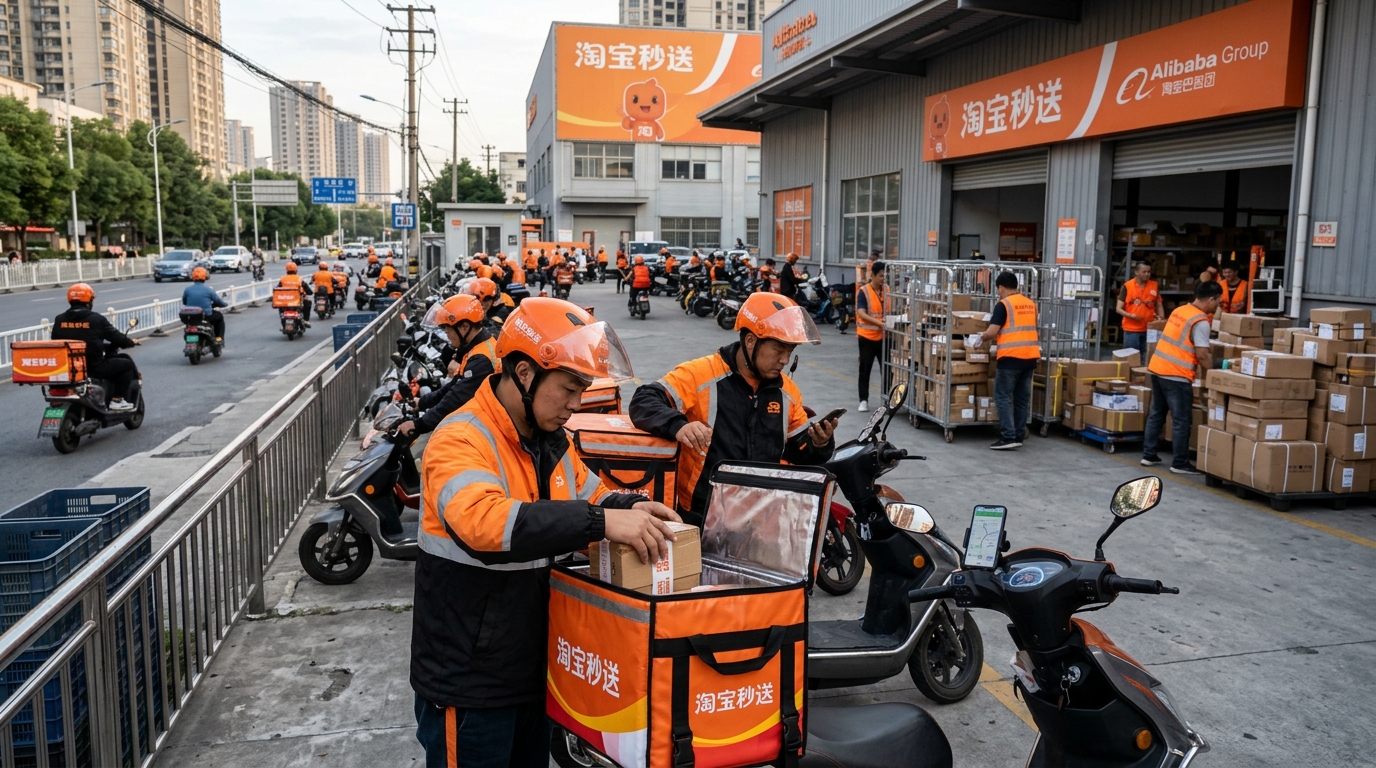
Total revenue for the China instant retail unit reached 58.757 billion yuan, or approximately 8.8 billion dollars, in the second quarter of fiscal 2027. This performance helped the broader Alibaba e-commerce group achieve an adjusted EBITA of 38.851 billion yuan. The massive 243 percent profit increase heavily stems from reduced spending on rapid fulfillment and aggressive consumer marketing. Executive Jiang Fan noted that the business expects to cut losses in half next year and reach total profitability by fiscal 2029.
Market share remains steady at roughly 42 to 46 percent, according to estimates from Goldman Sachs, Analysys, and UBS. Rather than fighting for pure order volume using cheap coffee and tea, Taobao pivoted its catalog strategy. By late 2025, non-tea-drink purchases grew to exceed 75 percent of all transactions. Higher average ticket sizes immediately improved unit economics per delivery trip. The platform also introduced AI solutions like the Flash Delivery Assistant in June 2026 to help sellers manage their daily operations.
Growth now depends heavily on non-food retail, which saw transaction values jump more than 40 percent between July and September 2026. Categories like fresh produce, household goods, and pharmaceuticals require complex inventory control. This reality shifts the competitive battlefield from basic rider dispatching to deep supply chain integration. Meanwhile, Meituan maintains an estimated 48 percent share based on early merchant network advantages. Competitor JD holds a smaller footprint at around 5 to 10 percent, following the recent departure of local life head Guo Qing.
Navigating the Shift to Complex Retail Categories
Surviving the current instant retail climate requires platforms and grocery executives to look beyond simple restaurant delivery. As leaders push into high-frequency household items and fresh foods, identifying missing SKUs becomes critical. Category managers can use assortment gap analysis to discover unserved local demand before rival networks claim those buyers. Building a profitable delivery basket demands constant monitoring of competitor ranges, pricing tiers, and regional stock levels.
Talk to our data team to see how granular catalog intelligence can protect your market position by visiting the FoodDataLab Contact page.