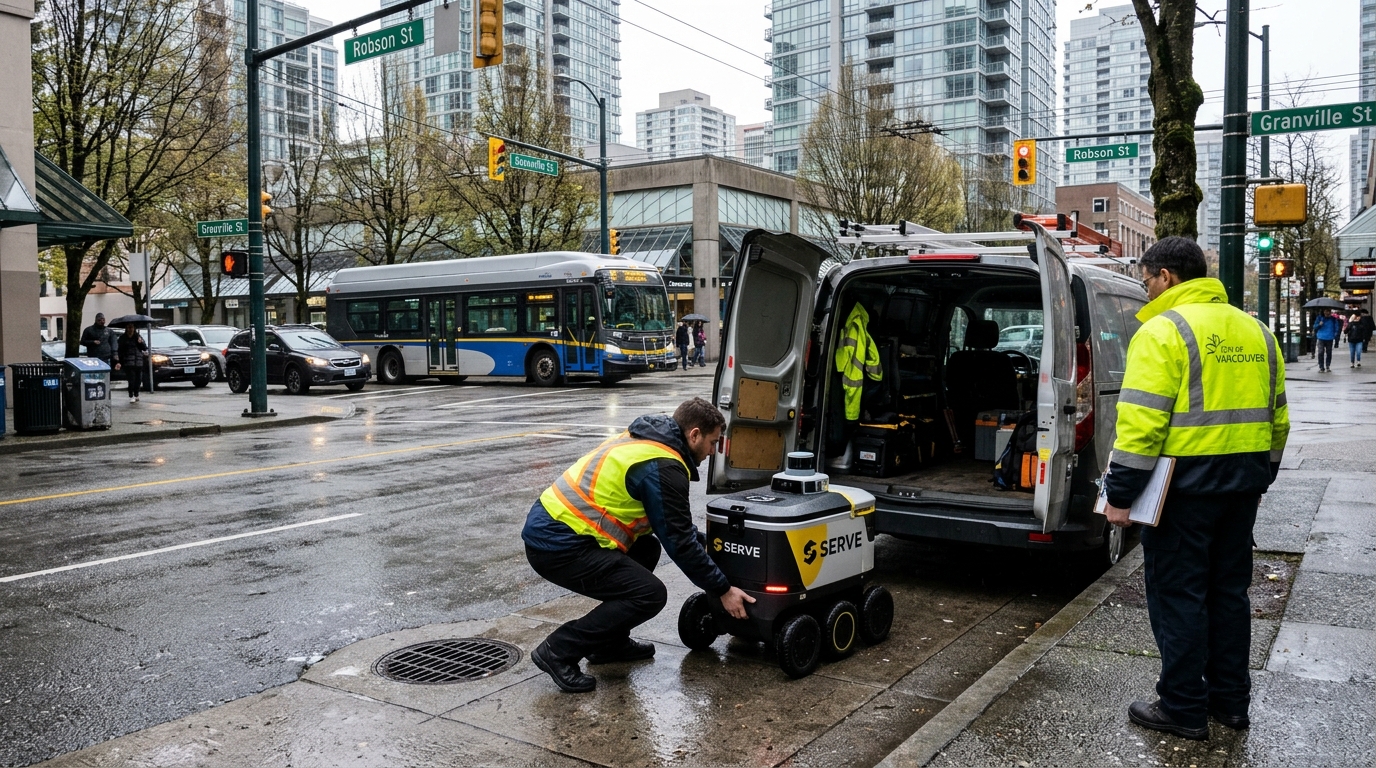
The local government voted to abandon the Serve Robotics initiative just before its anticipated Fall 2026 launch. Originally approved in May 2026, the six-month deployment was intended for the Downtown and Kitsilano districts. However, a newly elected council majority backed a motion from councillor Lucy Maloney to halt the rollout. Officials cited worries regarding the business use of sidewalks, potential hurdles for visually impaired pedestrians, and workforce displacement.
The San Francisco-based vendor, which currently operates over 2,000 automated vehicles across 44 municipalities, pushed back against the halt. Vice-president of policy Vignesh Ram argued that deploying small electric units would decrease short automobile journeys while generating local technology roles. Despite backing from local trade organizations urging a controlled data-gathering phase, the council prioritized immediate pedestrian network concerns over hardware testing.
Monitoring Urban Order Speeds
For platform directors, this municipal block highlights the volatility of hardware-based expansion strategies. Operations teams had viewed these short-haul devices as a mechanism to absorb low-margin, high-frequency orders during peak meal hours. Now that pedestrian walkways remain strictly off-limits to automated units, networks must closely monitor their current courier availability. When demand spikes in constrained zones like Downtown Vancouver, dispatch systems will face intense pressure to maintain competitive service windows.
Measuring the Human Fleet Advantage
Without automated support to handle nearby drop-offs, platform leaders need distinct visibility into local market dynamics. Tracking how fast rival services complete orders in these restricted blocks reveals who is successfully managing their driver pool. Operations managers can deploy Delivery ETA Benchmarking to observe the delivery times competitor apps advertise, area by area. Pinpointing exactly where rivals suffer from congestion allows your platform to adjust local parameters and capture frustrated diners.
Discover how granular market intelligence can optimize your regional service strategies by contacting the FoodDataLab team today: https://fooddatalab.com/contact#form