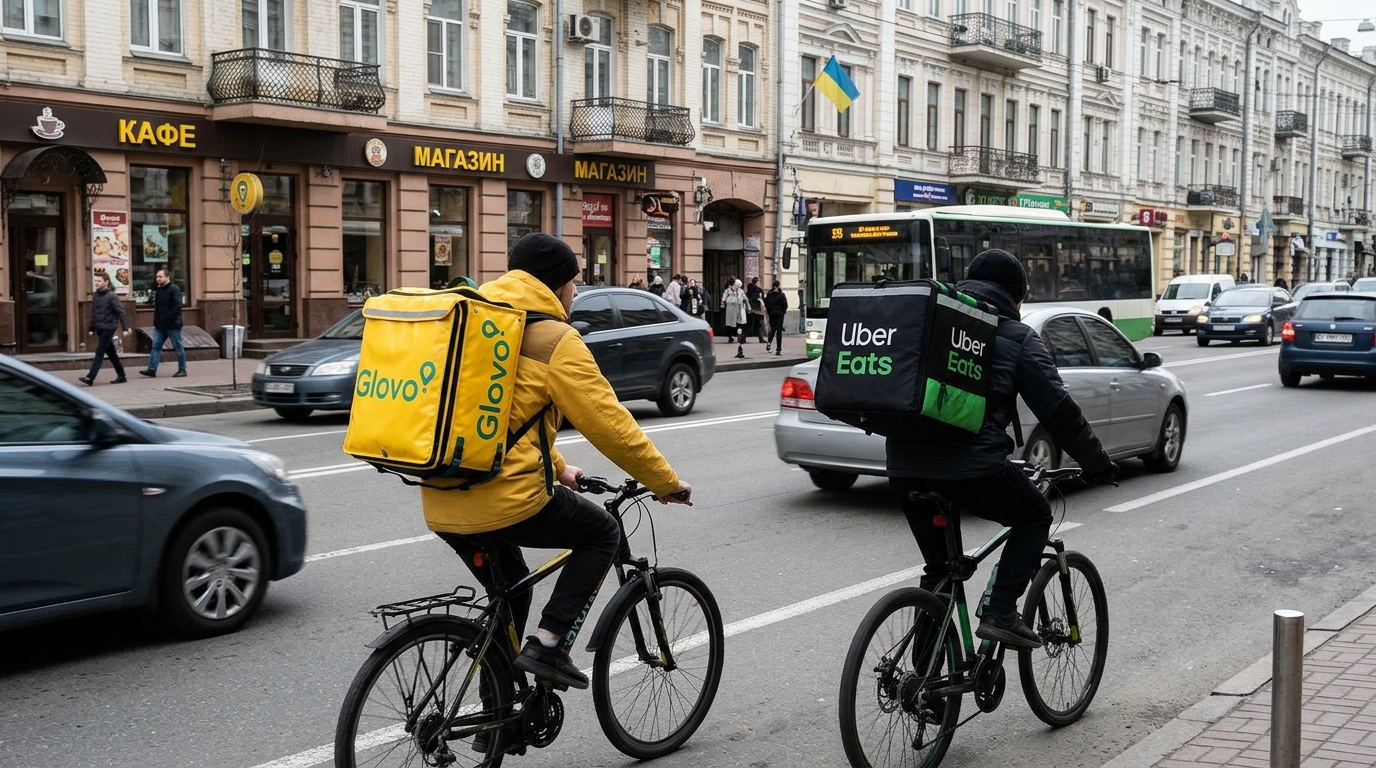
The regulatory green light allows Uber International Technologies II Corporation to govern the Ukrainian branch of Delivery Hero. This specific transfer belongs to a broader agreement announced in July. That wider framework valued the Berlin-based Delivery Hero at roughly $14.8 billion. While Uber absorbs operations in 50 different countries, an investment entity named SSW Partners will acquire the remaining 14 territories. Those divested regions include Poland, Romania and Spain.
Glovo relies heavily on its Ukrainian operations to drive volume. Sacha Michaud, co-founder of the Spanish delivery brand, recently stated that the country ranks among their five largest global regions. He noted that the domestic enterprise achieves double-digit growth metrics. Uber executives intend to prioritize established areas like these. As a result, the ride-hailing giant previously halted its food delivery rollout across five other European nations to concentrate capital on core regions.
This transfer of ownership creates significant platform visibility challenges for operators and restaurant groups. Before the expected closing date in the second half of 2027, the two applications will likely begin harmonizing their merchant networks. Delivery zones will shift to optimize driver fleets. Menus that were previously exclusive to a single application might suddenly appear across both networks.
Preparing for Network Integration
Market intelligence teams must monitor how venue availability evolves during this transition. When a major competitor absorbs a rival, tracking which partners migrate and which ones drop off becomes vital. You can utilize restaurant matching and overlap analysis to map out precise coverage shifts across these merging platforms. This continuous observation ensures your own geographic expansion targets the correct missing local inventory.
To discover how precise local intelligence protects your expansion strategy during industry mergers, speak with the FoodDataLab team today.